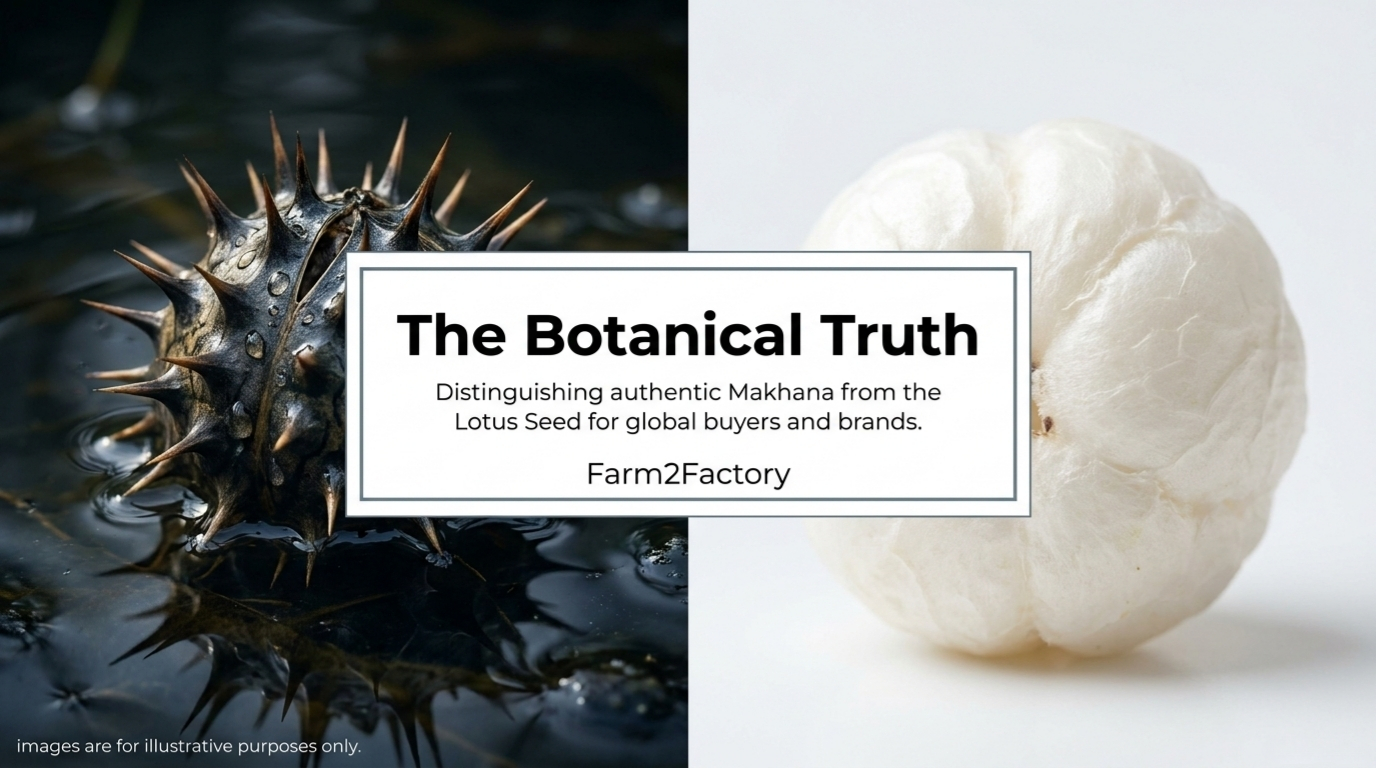
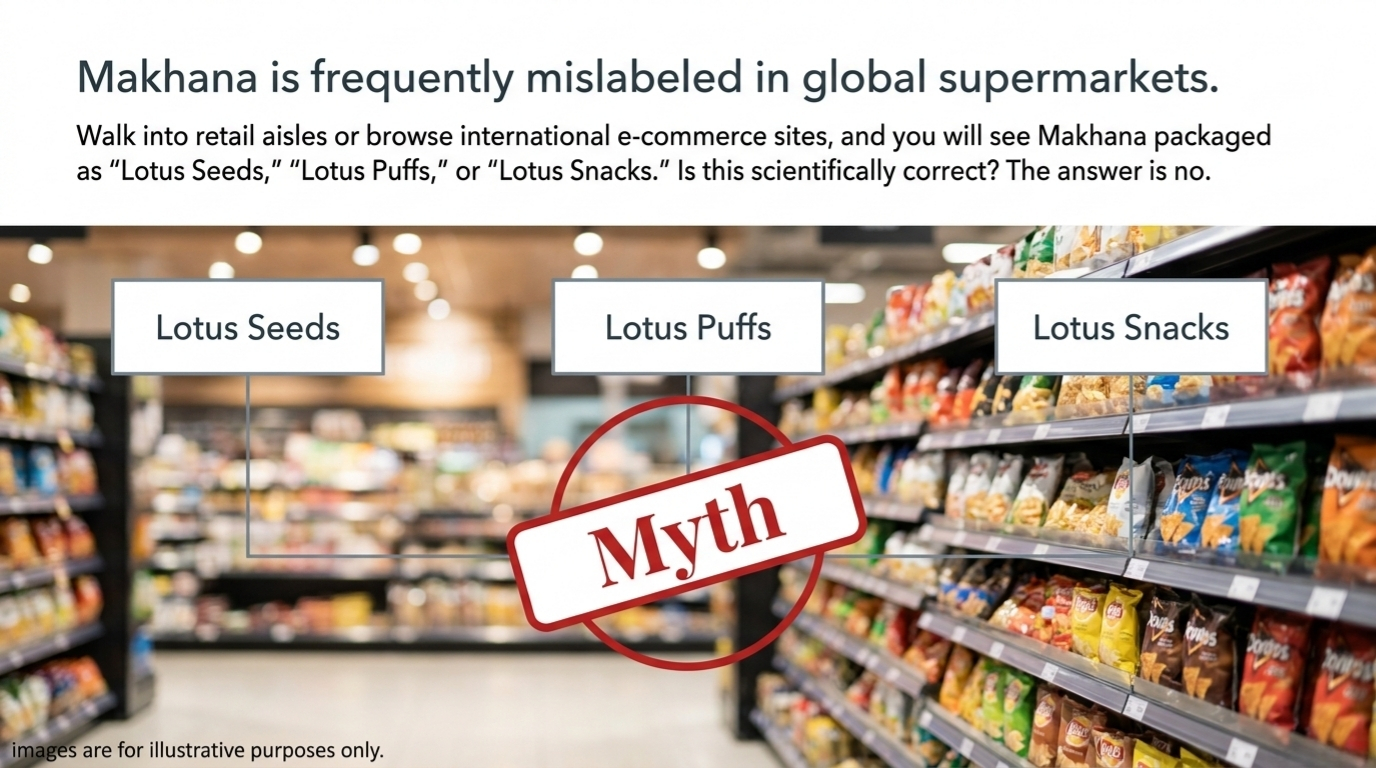
Walk into a supermarket anywhere in the world, and you'll often find packets labelled "Lotus Seeds," "Lotus Puffs," or simply "Lotus Snacks." Even on many international e-commerce websites, Makhana is marketed under the name Lotus Seeds.
But is that scientifically correct?
The answer is no.
While these names have become common in the global food trade, Makhana and Lotus are two entirely different plants. Understanding this distinction is important not only for consumers but also for wholesalers, importers, exporters, food brands, and entrepreneurs entering the Makhana industry.
At Farm2Factory, we believe that accurate product knowledge is just as important as delivering premium quality. Knowing the difference helps businesses communicate honestly with customers and make informed sourcing decisions.
Why Do People Call Makhana "Lotus Seeds"?
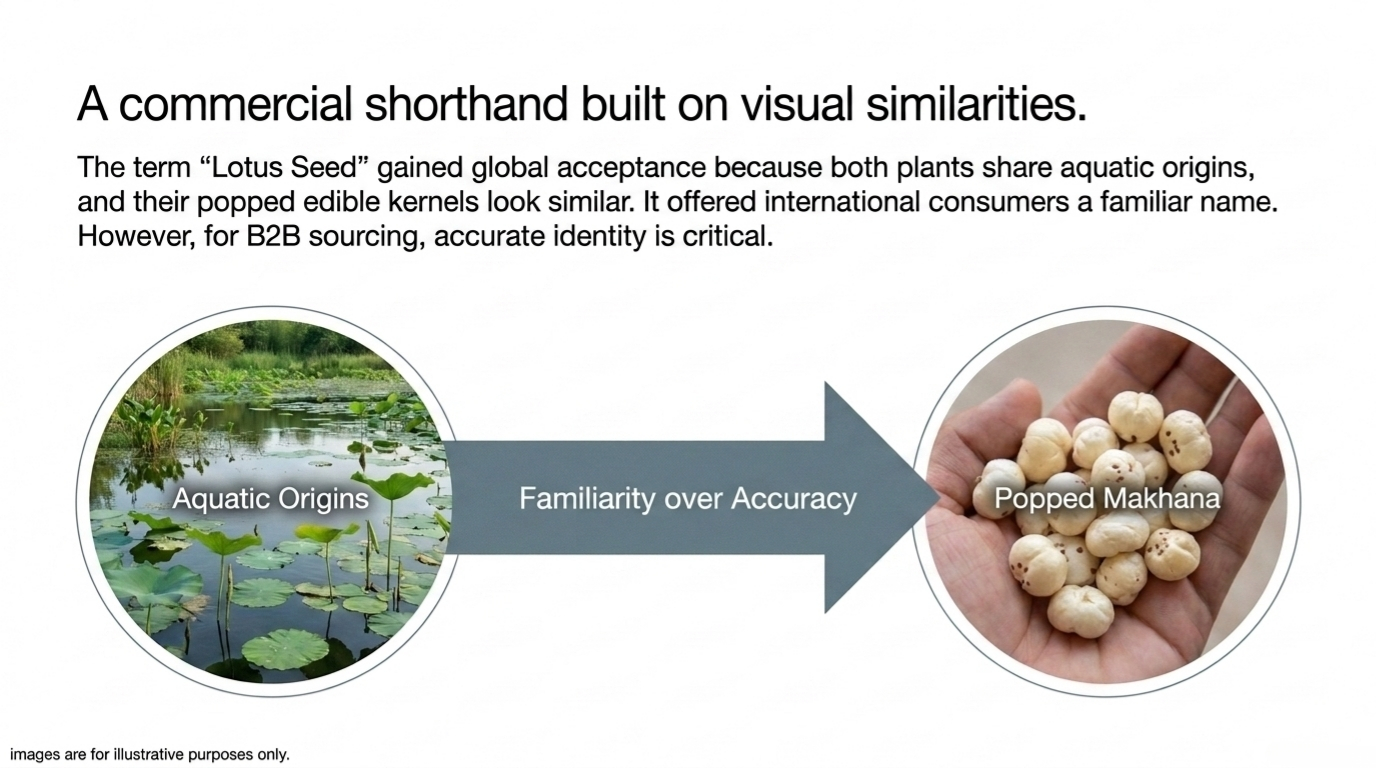
The term Lotus Seed became popular mainly because Makhana is an aquatic crop and its popped kernels resemble edible seeds. Over time, the name gained acceptance in export markets and retail packaging because it was more familiar to international consumers.
However, from a botanical perspective, this terminology is inaccurate.
The white, crunchy snack sold worldwide as Makhana comes from a completely different aquatic plant than the sacred lotus.
This is why professional buyers and food businesses should understand the true identity of the product they are purchasing.
The Scientific Difference
One of the easiest ways to distinguish the two plants is through their scientific names.
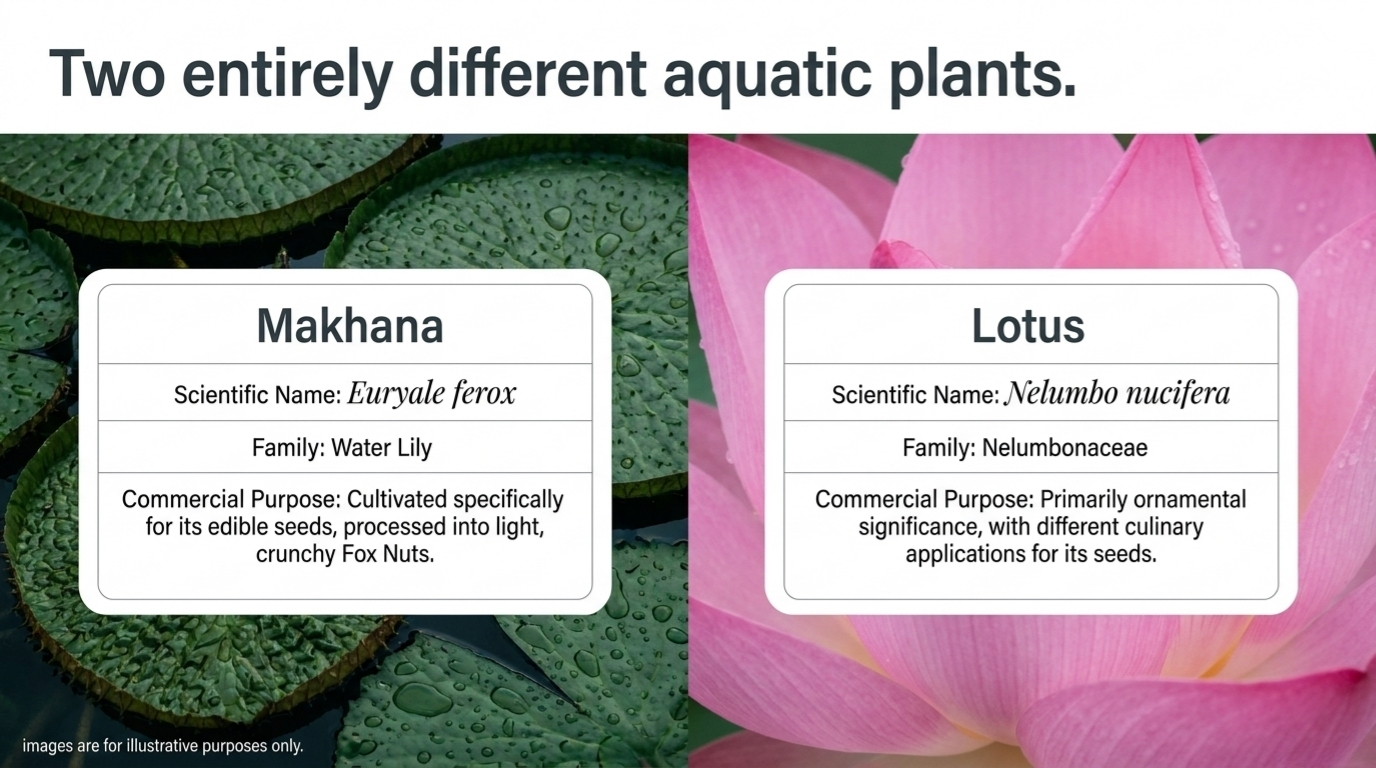
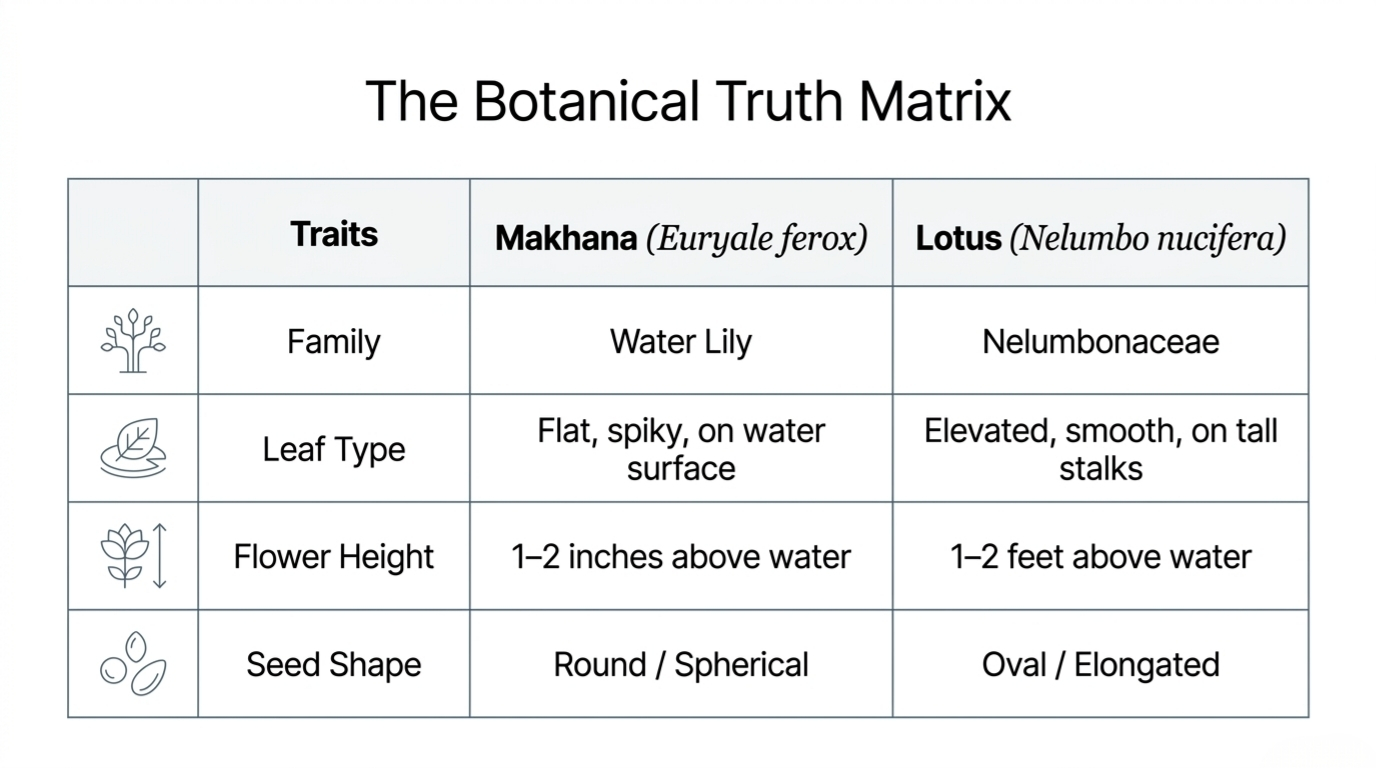
Makhana
Scientific Name: Euryale ferox
Makhana belongs to the water lily family and is cultivated specifically for its edible seeds, which are processed into the light, crunchy Fox Nuts enjoyed around the world.
Lotus
Scientific Name: Nelumbo nucifera
The lotus is an entirely different aquatic plant, widely known for its large flowers and ornamental significance. Its seeds are also edible, but they are different in appearance, taste, processing method, and commercial use.
Since the two plants belong to different botanical groups, calling Makhana a true Lotus Seed is scientifically incorrect.
How Can You Identify the Difference?
Even if you've never studied botany, you can easily tell the difference by observing the plant.
The Leaves
The leaves of Makhana and Lotus are noticeably different.
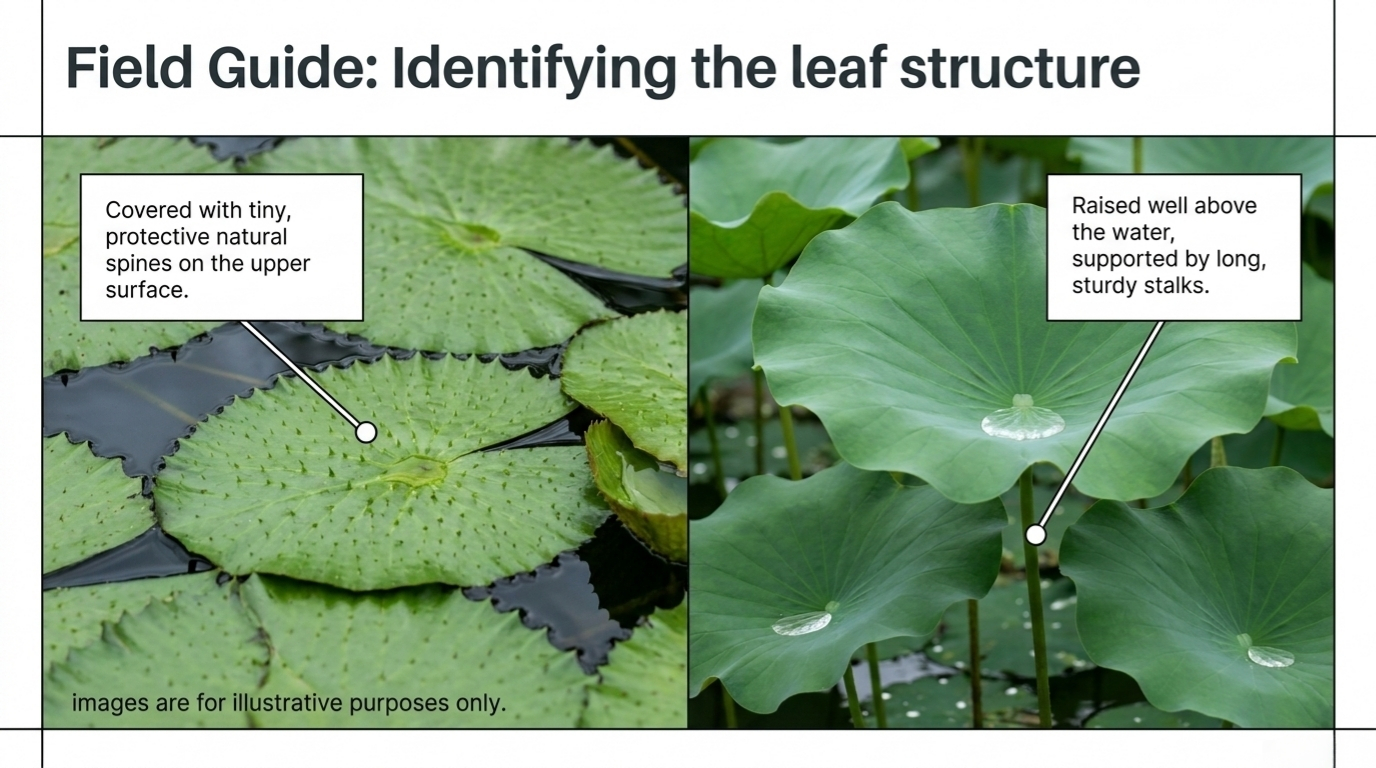
Makhana leaves spread across the surface of the water and are thick, broad, and covered with tiny protective spines on their upper surface. These natural spines help protect the plant in its aquatic environment.
Lotus leaves, on the other hand, are smooth, round, and usually rise well above the water, supported by long, sturdy stalks.
This difference alone makes it easy for experienced farmers to distinguish between the two crops.
The Flowers
Another visible difference is found in the flowers.
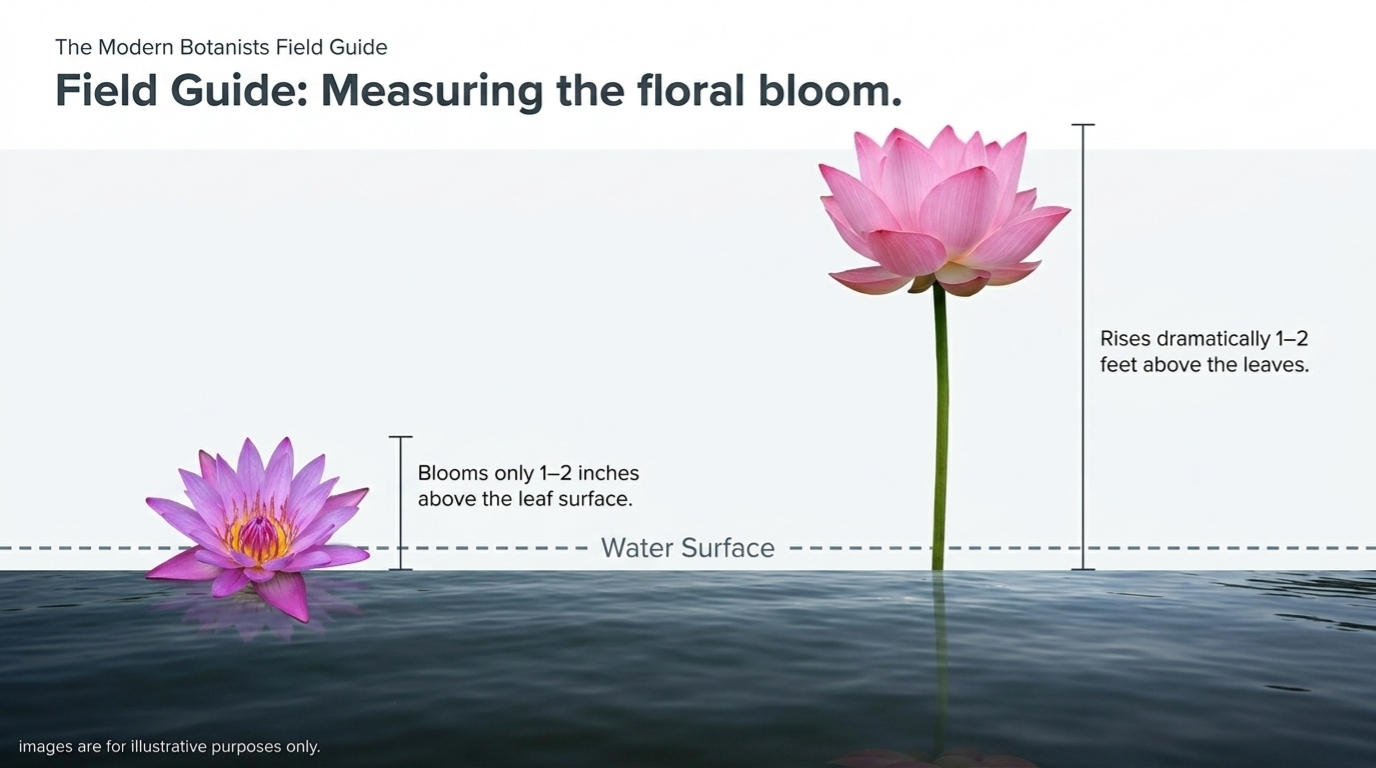
The Makhana flower typically blooms only 1–2 inches above the leaf surface, remaining close to the water.
In contrast, the Lotus flower rises dramatically, often 1–2 feet above the leaves, making it one of the most recognizable aquatic flowers in the world.
This characteristic is one of the simplest ways to identify the two plants in the field.
The Seeds
The seeds themselves also differ.
Before processing:
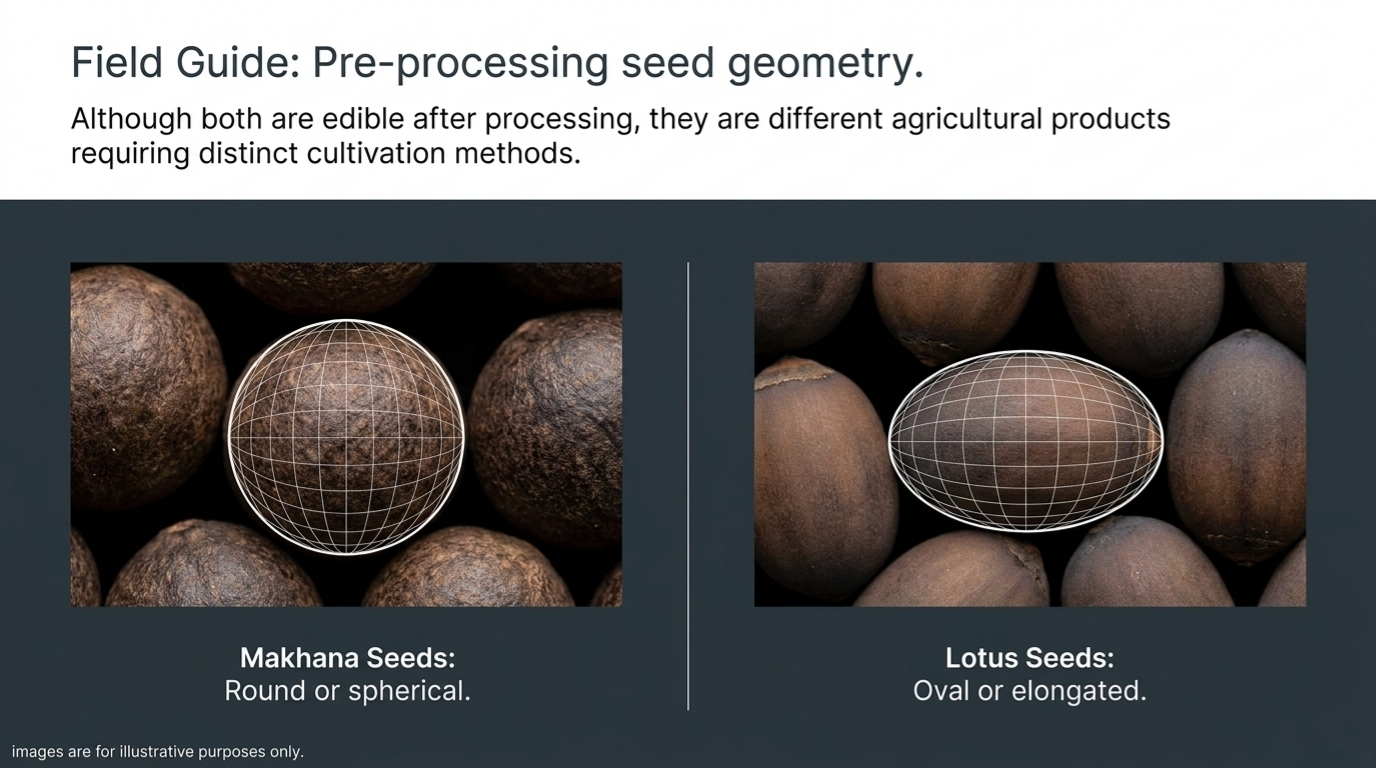
- Makhana seeds are generally round or spherical.
- Lotus seeds are oval or elongated.
Although both are edible after processing, they are different agricultural products with distinct cultivation methods and commercial applications.
Why This Difference Matters in Business
For consumers, the terminology may appear to be a minor detail.
For businesses, however, accuracy matters.
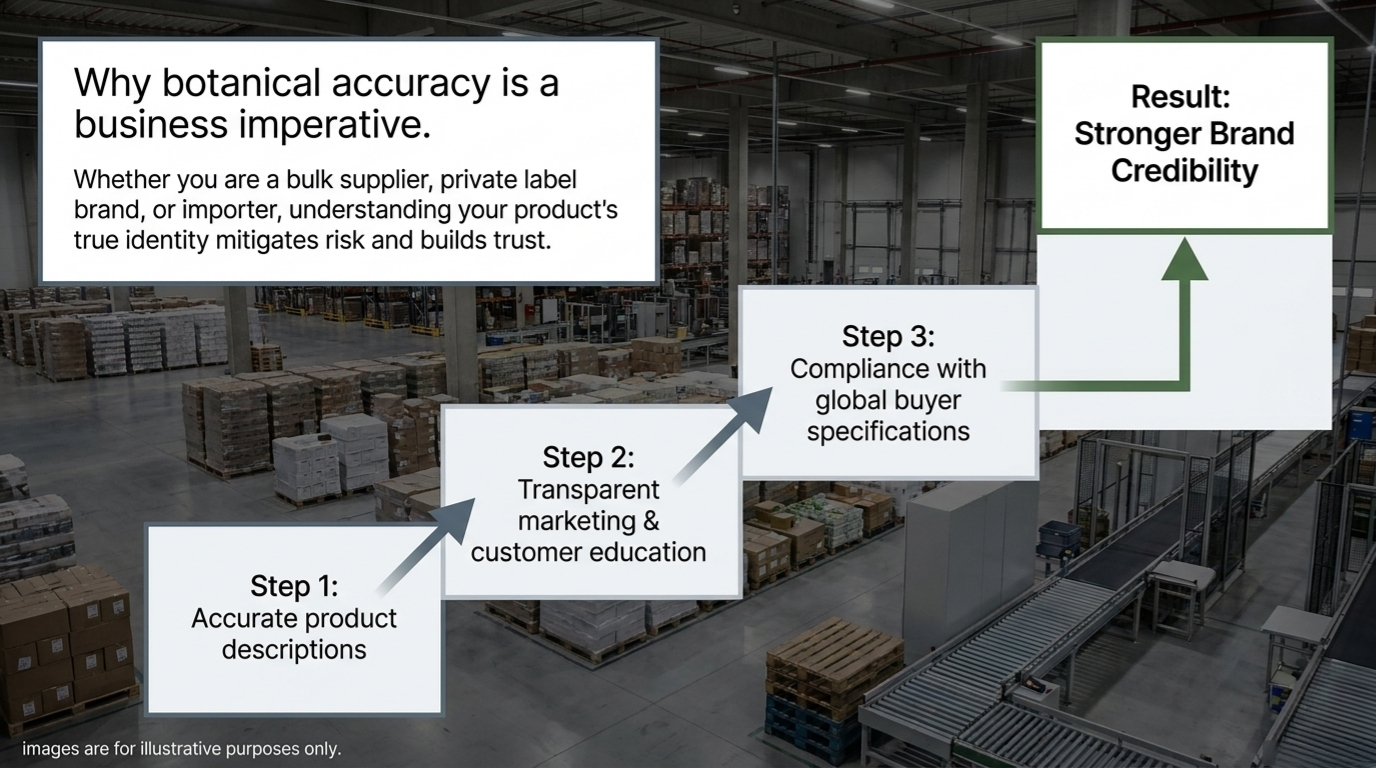
Whether you are a Bulk Makhana Supplier, a Private Label Healthy Snacks brand, or an international importer, understanding the true identity of the product helps ensure:
- Accurate product descriptions
- Better customer education
- Transparent marketing
- Compliance with buyer specifications
- Stronger brand credibility
Many overseas buyers still search online using terms like Lotus Seeds because of common market usage. This is why reputable companies often include both names in product listings while clearly identifying the product as Makhana or Fox Nuts.
Why Makhana is Better Known as Fox Nuts
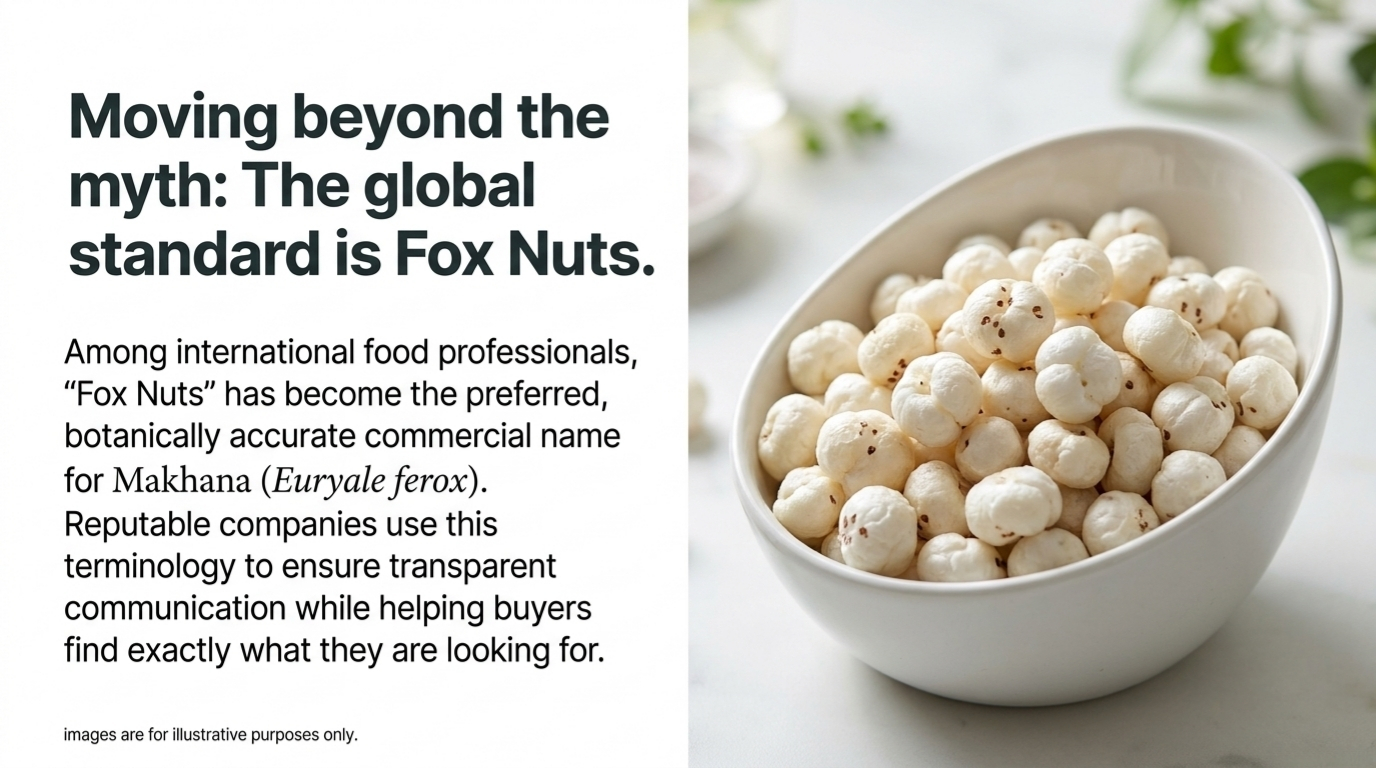
Among international food professionals, Fox Nuts has become the preferred commercial name for Makhana.
As a trusted Fox Nuts Exporter, Makhana Exporter India, and Makhana International Supplier, Farm2Factory uses globally recognized terminology while maintaining botanical accuracy.
This helps buyers find the product they are looking for while ensuring transparent communication.
From Bihar to the World
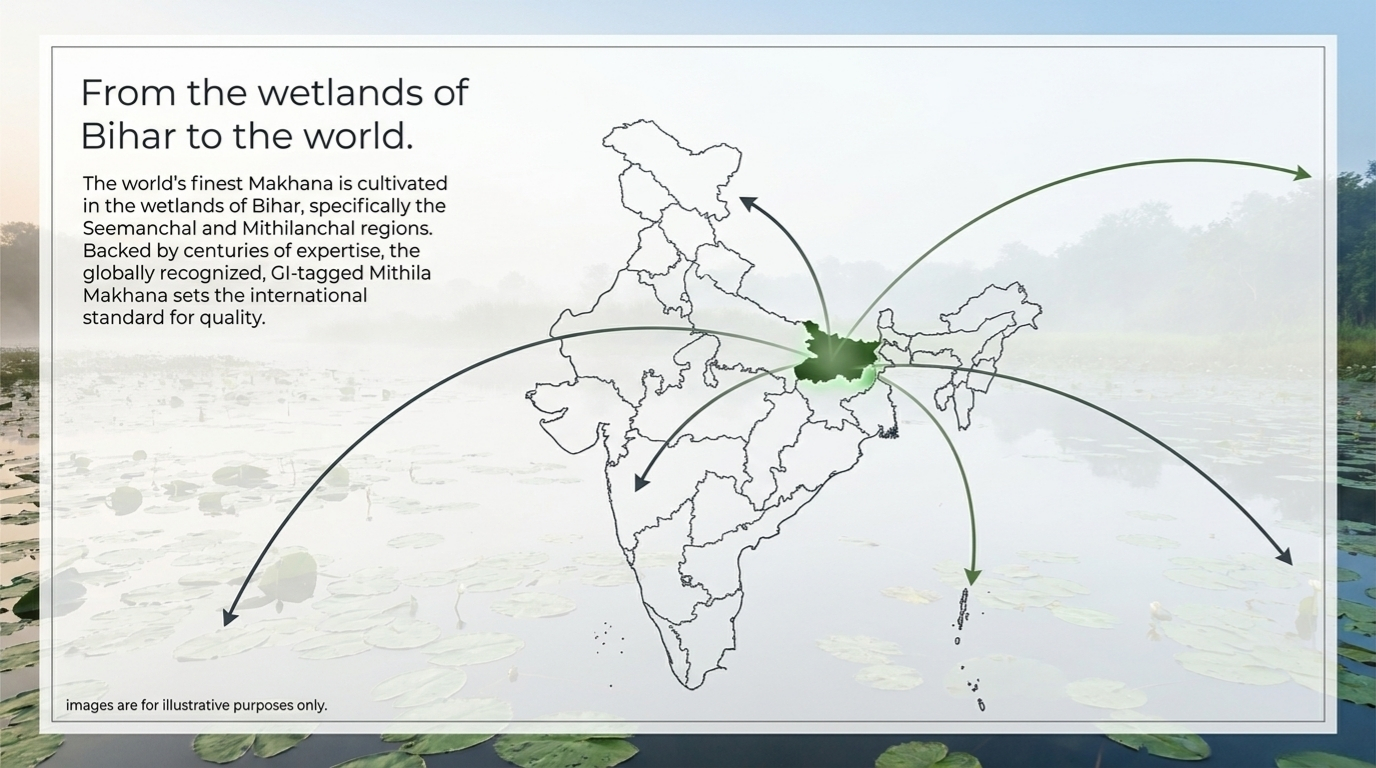
The world's finest Makhana comes from the wetlands of Bihar, particularly the Seemanchal and Mithilanchal regions. The internationally recognized GI-tagged Mithila Makhana reflects the region's centuries-old expertise in cultivating and processing this unique crop.
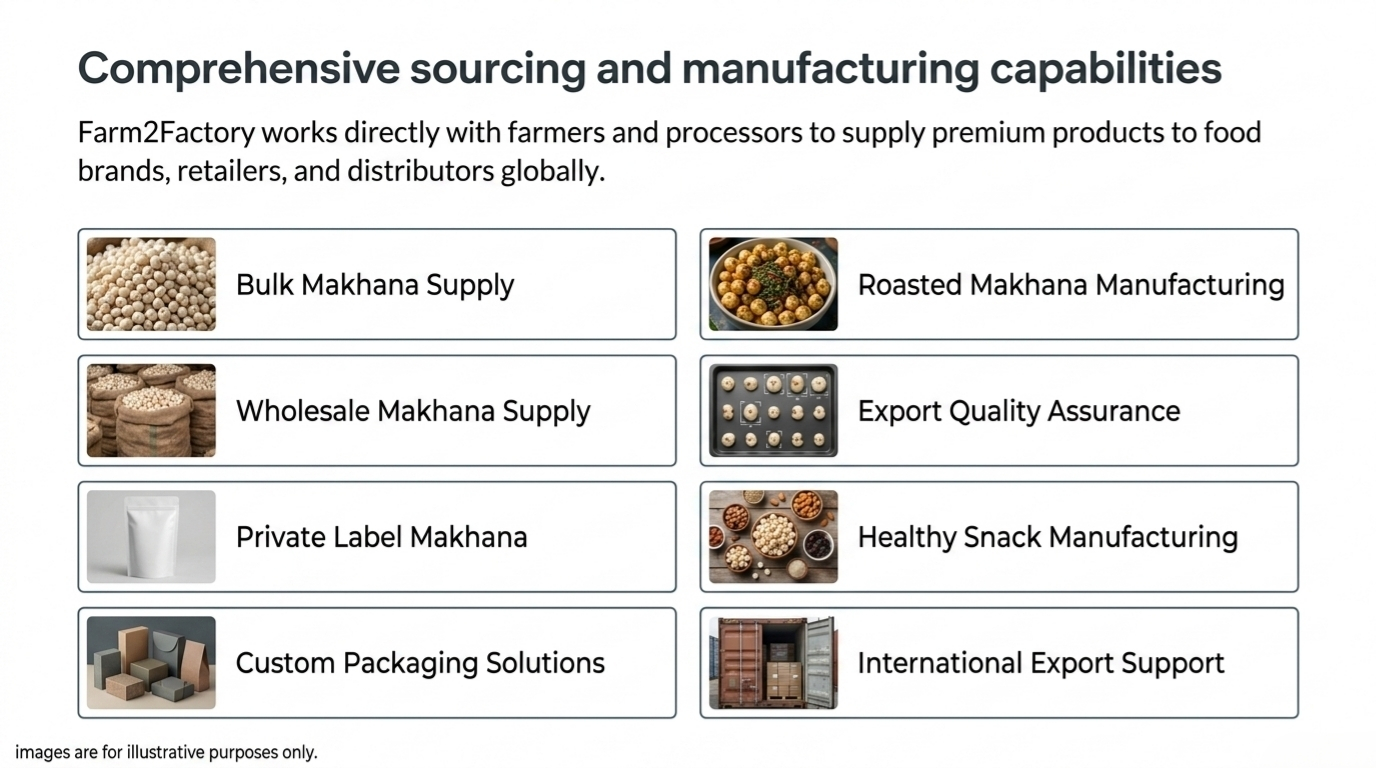
Farm2Factory works directly with farmers and processors to supply premium-quality products to food brands, retailers, wholesalers, and distributors across the globe.
Our capabilities include:
- Bulk Makhana Supply
- Wholesale Makhana Supply
- Private Label Makhana
- Custom Packaging Solutions
- Roasted Makhana Manufacturing
- Export Quality Makhana
- Healthy Snack Manufacturing
- International Export Support
The Importance of Learning Before Entering the Makhana Business
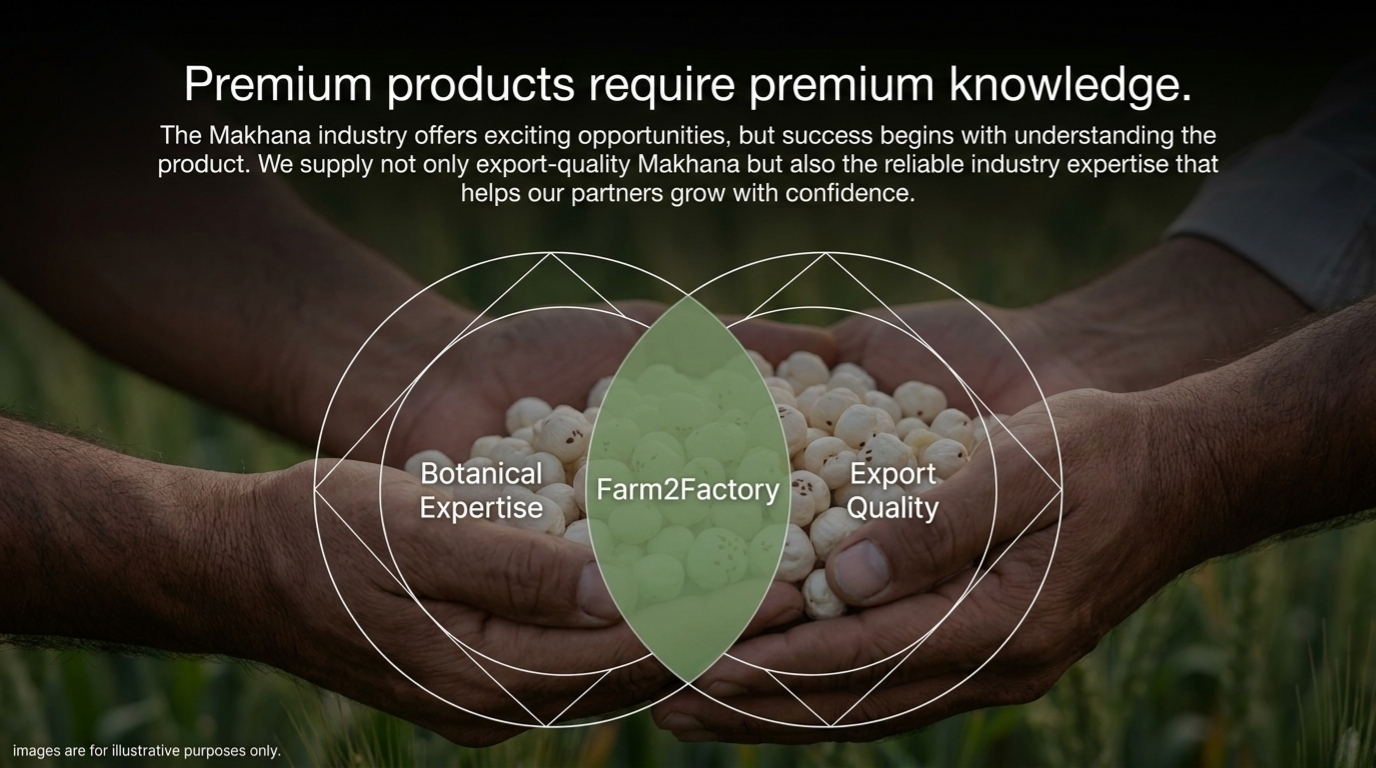
The Makhana industry offers exciting opportunities, but success begins with understanding the product itself.
Knowing the difference between Makhana and Lotus helps businesses avoid common misconceptions, communicate more accurately with customers, and build trust in domestic as well as international markets.
The more informed you are about cultivation, grading, processing, and terminology, the better equipped you will be to make confident business decisions.
Conclusion
Although many people casually refer to Makhana as Lotus Seed or Lotus Puff, the two are not the same.
They differ in their scientific names, plant structure, leaves, flowers, and seeds. Understanding these differences is essential for wholesalers, retailers, exporters, startups, and anyone planning to build a successful Makhana business.
At Farm2Factory, we believe that premium products should always be supported by accurate knowledge. As a trusted Makhana Exporter India, Premium Makhana Exporter, and Healthy Snack Exporter from India, we are committed to supplying not only export-quality Makhana but also reliable industry expertise that helps our partners grow with confidence.
Strategic Sourcing Advantage
Managing wholesale snack volume logistics requires complete pond-to-pack visibility. Farm2Factory bypasses traditional traders to deliver guaranteed purity, optimized container payloads, and reliable pricing.