
One of the most common questions asked by wholesalers, distributors, retailers, startups, and importers is:
"What is the current Makhana rate?"
The answer is not as simple as quoting a fixed price. Unlike many packaged products, Makhana prices are dynamic and change regularly based on several important factors, including quality, size, grading, seasonal availability, demand, and order quantity.
Whether you are planning to buy Makhana in bulk, launch your own healthy snack brand, or import premium Fox Nuts from India, understanding how Makhana pricing works will help you make informed purchasing decisions.
At Farm2Factory, we believe buyers should understand the factors behind pricing instead of relying only on daily market quotations.
Where is Makhana Produced in Bihar?
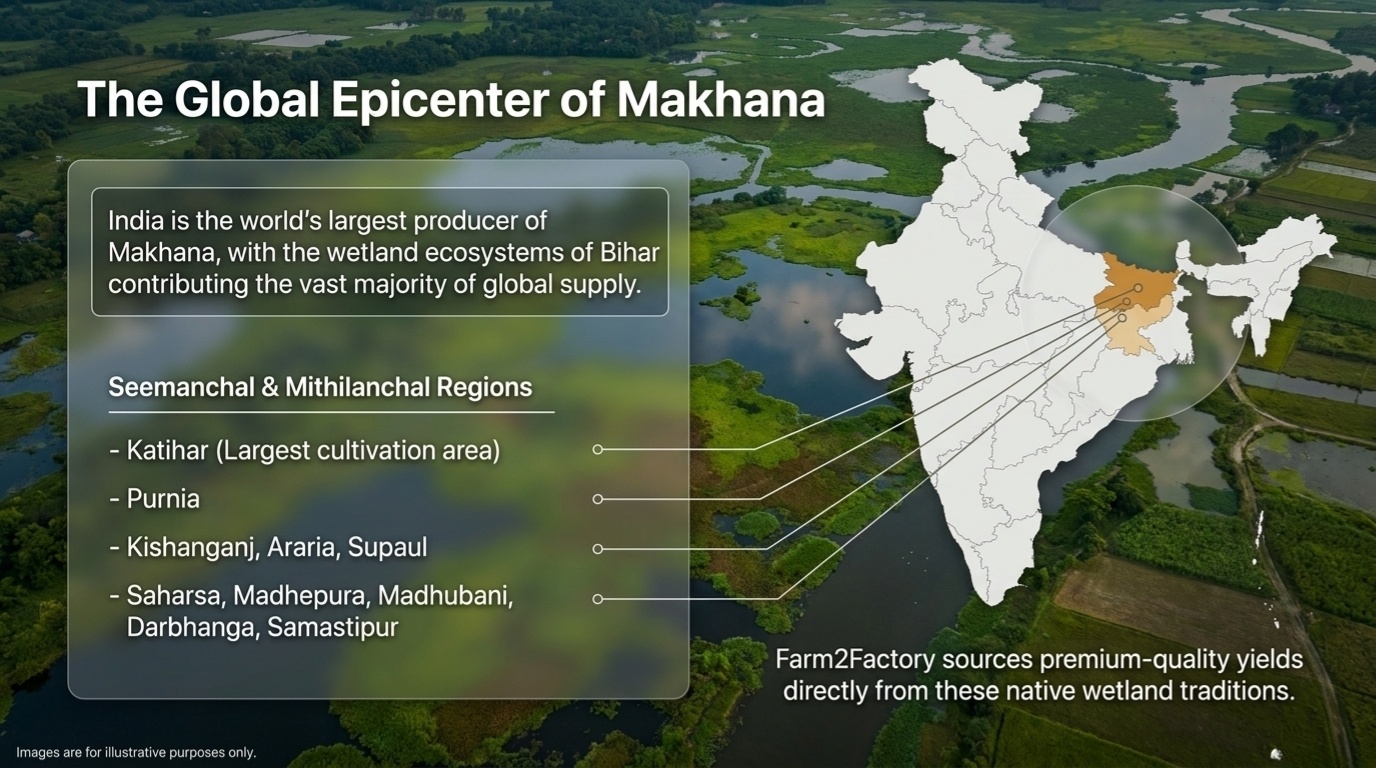
India is the world's largest producer of Makhana, and Bihar contributes the majority of the country's production.
The major Makhana-producing districts include:
- Katihar
- Purnia
- Kishanganj
- Araria
- Supaul
- Saharsa
- Madhepura
- Madhubani
- Darbhanga
- Samastipur
Among these regions, Katihar has one of the largest areas under Makhana cultivation, followed by Purnia, making the Seemanchal and Mithilanchal regions the backbone of India's Makhana industry. These regions are known for their favorable wetland ecosystem and long tradition of Makhana cultivation.
As a trusted Bihar Makhana Exporter and Makhana Manufacturer India, Farm2Factory sources premium-quality Makhana directly from these producing regions.
Does Makhana Have a Fixed Price?
No.
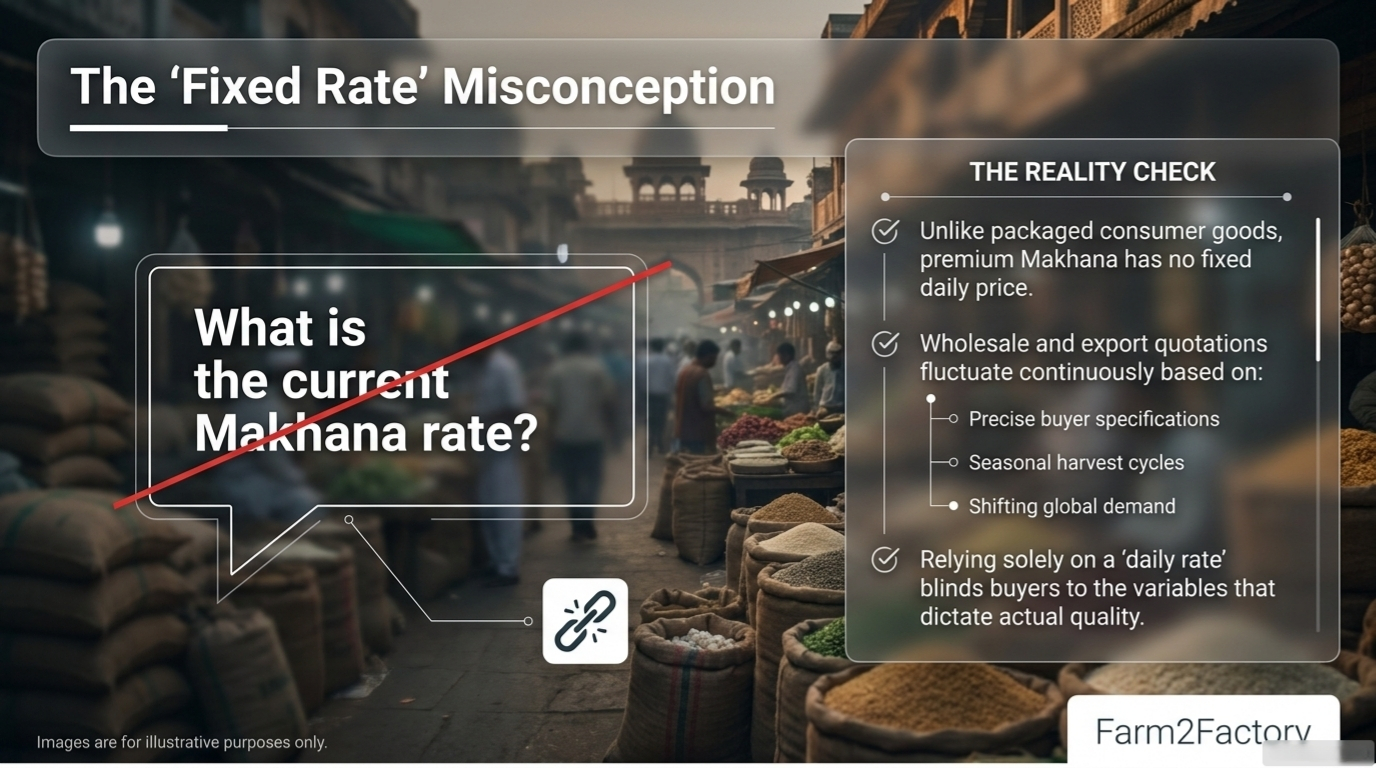
One of the biggest misconceptions in the market is that Makhana has a fixed per-kilogram price.
In reality, Makhana prices fluctuate frequently due to changing market conditions. Wholesale and mandi prices can change based on supply, demand, quality, and season, while export quotations are usually prepared according to the buyer's required specifications rather than a single daily market rate.
For this reason, experienced buyers request quotations based on product specifications instead of asking only for the "today's rate."
Factors That Affect Makhana Prices
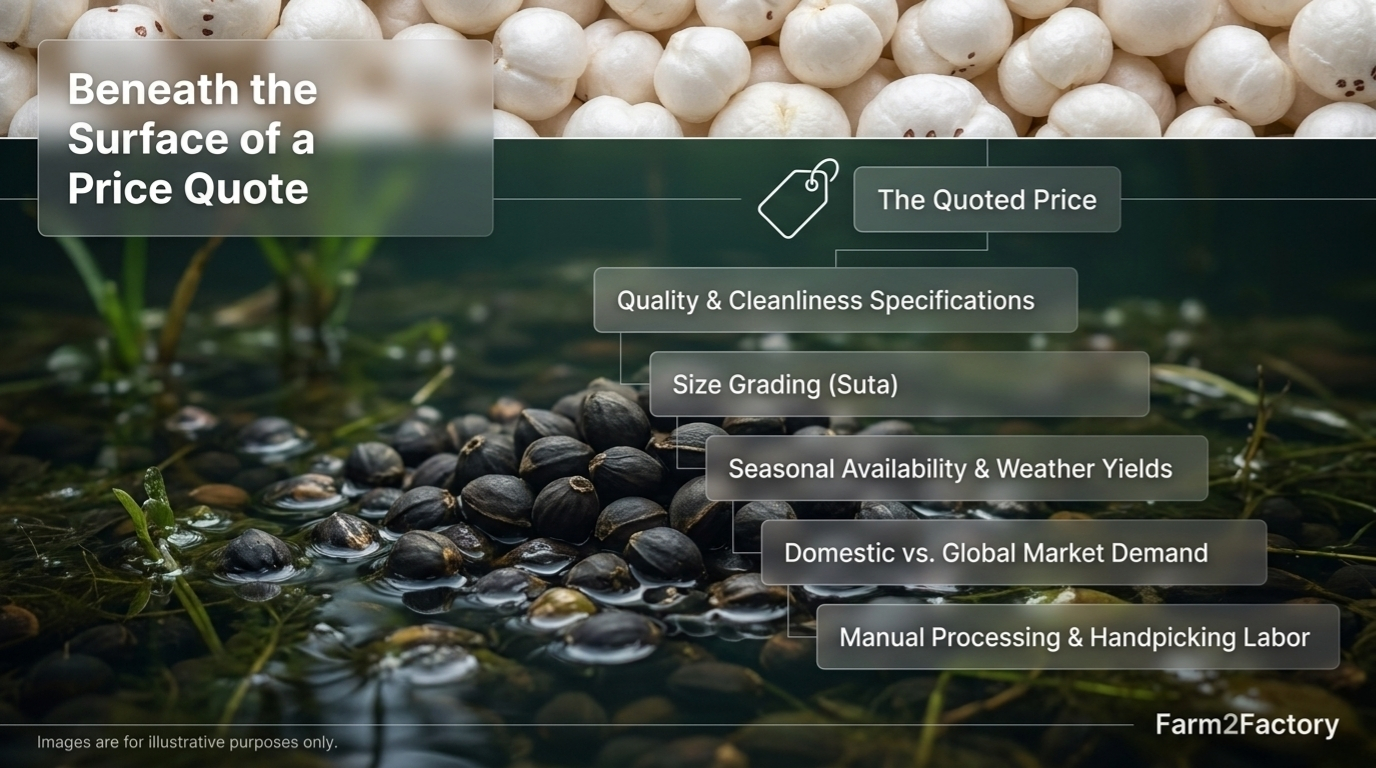
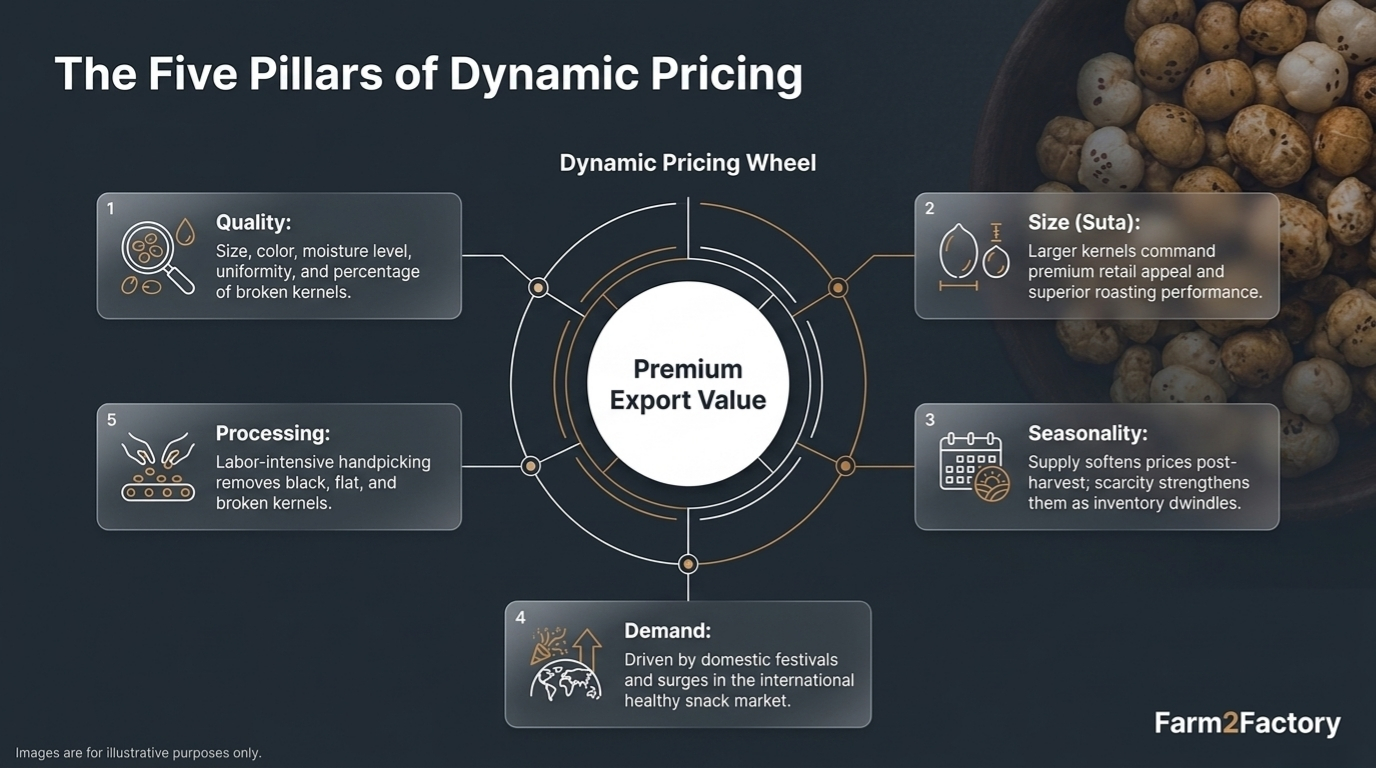
1. Quality
Quality is the biggest factor affecting price.
Premium export-grade Makhana that is carefully graded and handpicked commands a higher price than mixed or lower-grade products.
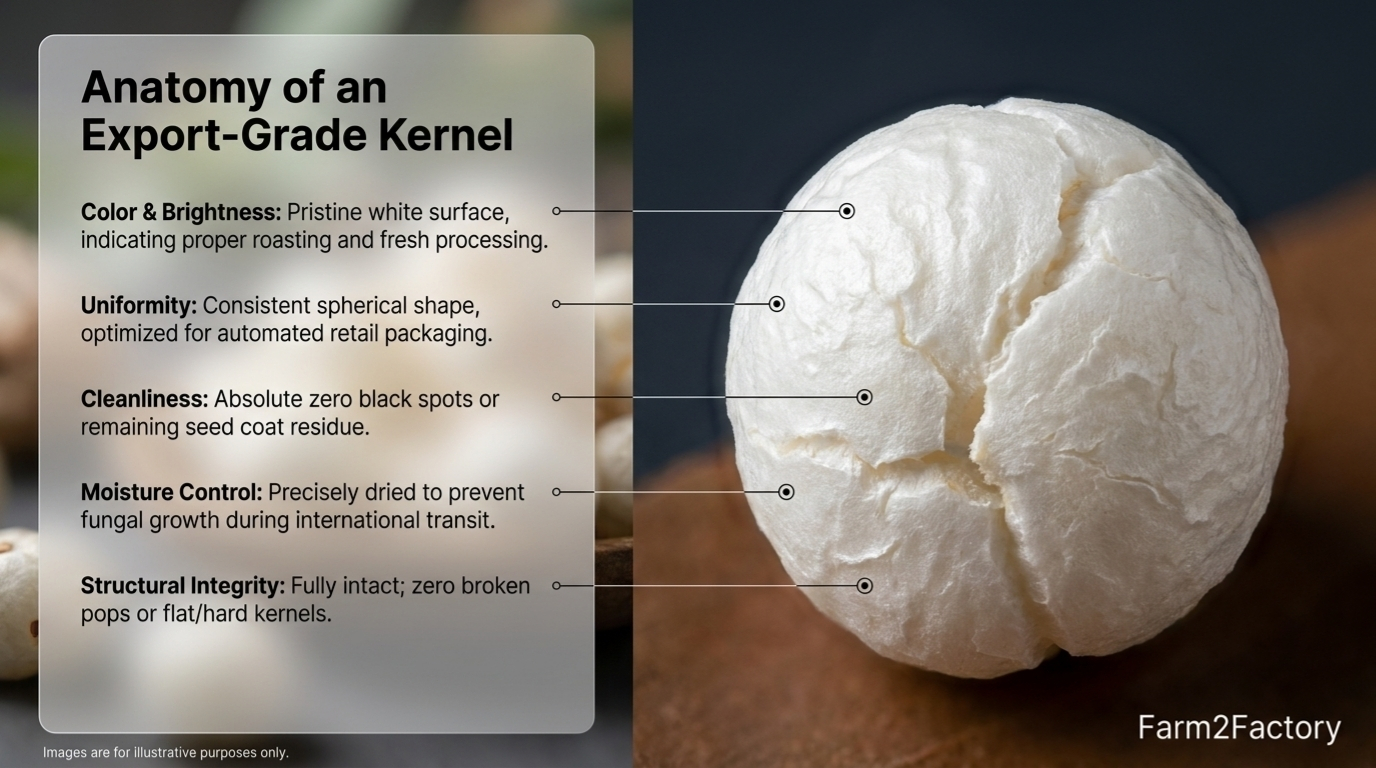
Quality parameters include:
- Kernel size
- Colour
- Moisture level
- Uniformity
- Cleanliness
- Percentage of broken kernels
- Handpicked quality
The better the specifications, the higher the market value.
2. Size (Suta Grade)
The size of Makhana directly impacts its pricing.
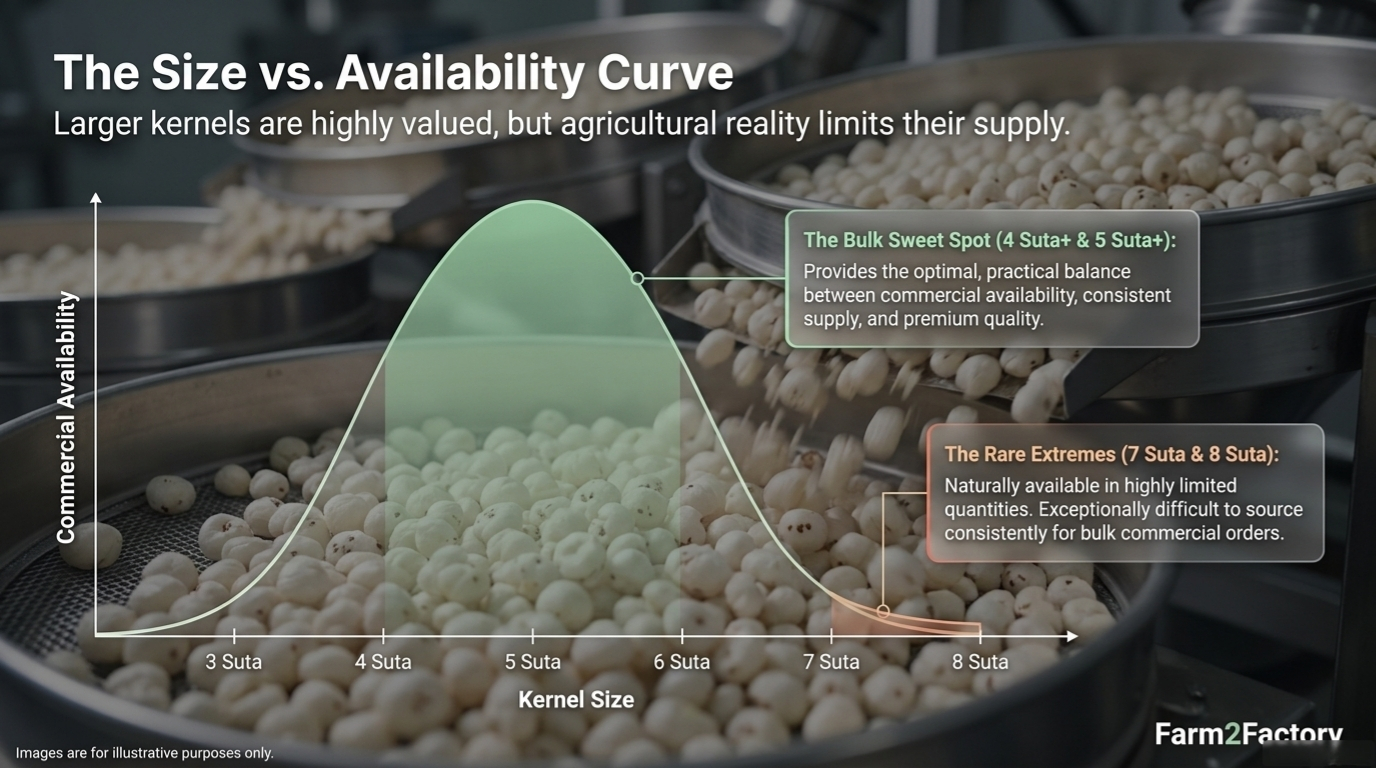
Larger kernels are generally more valuable because of their superior appearance, roasting performance, and premium retail appeal.
However, buyers should understand that extremely large grades such as 7 Suta or 8 Suta are naturally available in very limited quantities. Because of this limited availability, supplying these grades consistently in bulk is often difficult.
For most commercial and export orders, grades like 4 Suta+ Handpicked and 5 Suta+ Handpicked provide a practical balance between availability, consistency, and quality.
3. Seasonal Availability
Makhana is an agricultural product, so production depends on the harvest cycle.
During periods of high supply, prices may soften. As inventories reduce and fresh production becomes limited, prices generally strengthen due to reduced availability. Weather conditions can also influence crop quality and yield, which in turn affects pricing.
4. Market Demand
Domestic festivals, international export orders, and increasing demand for healthy snacks all influence Makhana prices.
Higher demand generally results in stronger wholesale prices, particularly for premium grades.
5. Processing and Handpicking
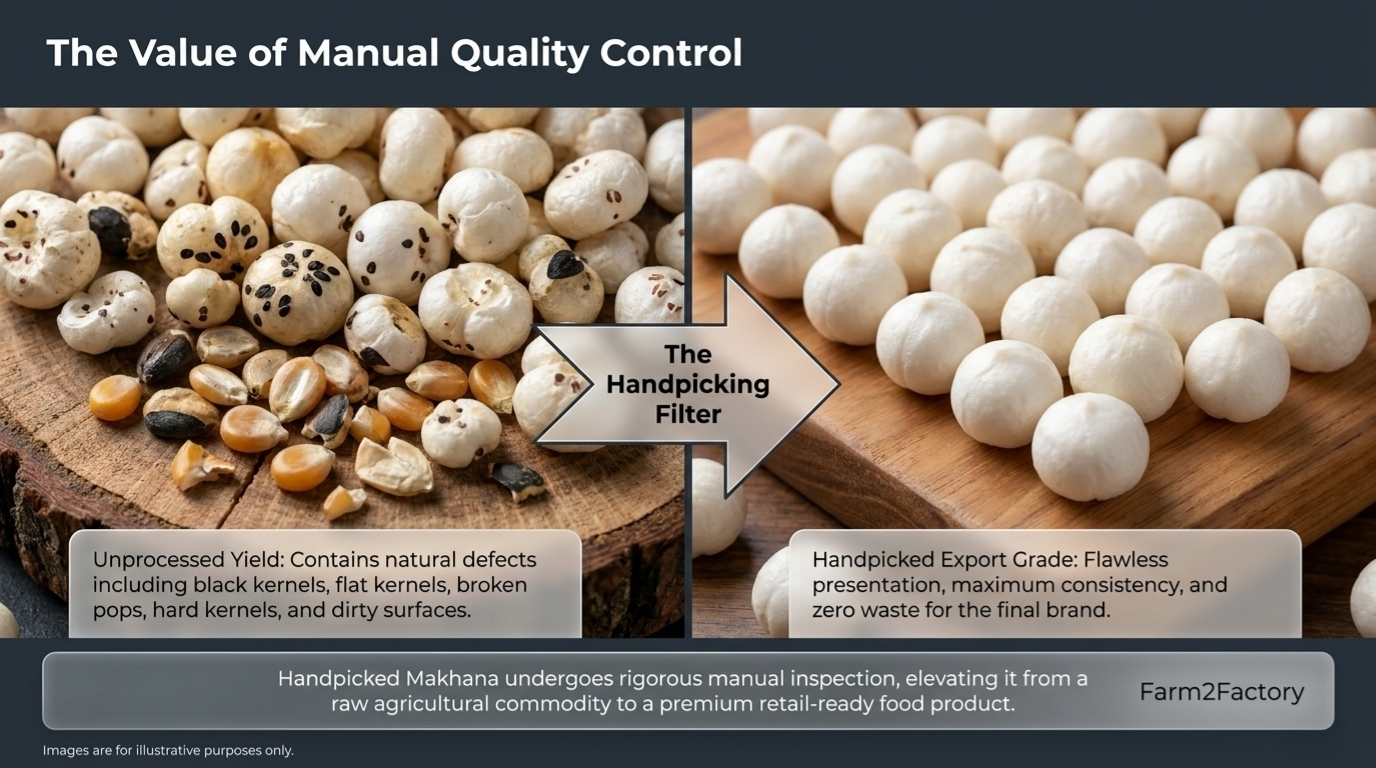
Handpicked Makhana undergoes additional manual inspection to remove black kernels, flat kernels, broken pops, hard kernels, dirty kernels, and other defects.
This additional quality control improves consistency and presentation, making handpicked grades more valuable for premium retail and export markets.
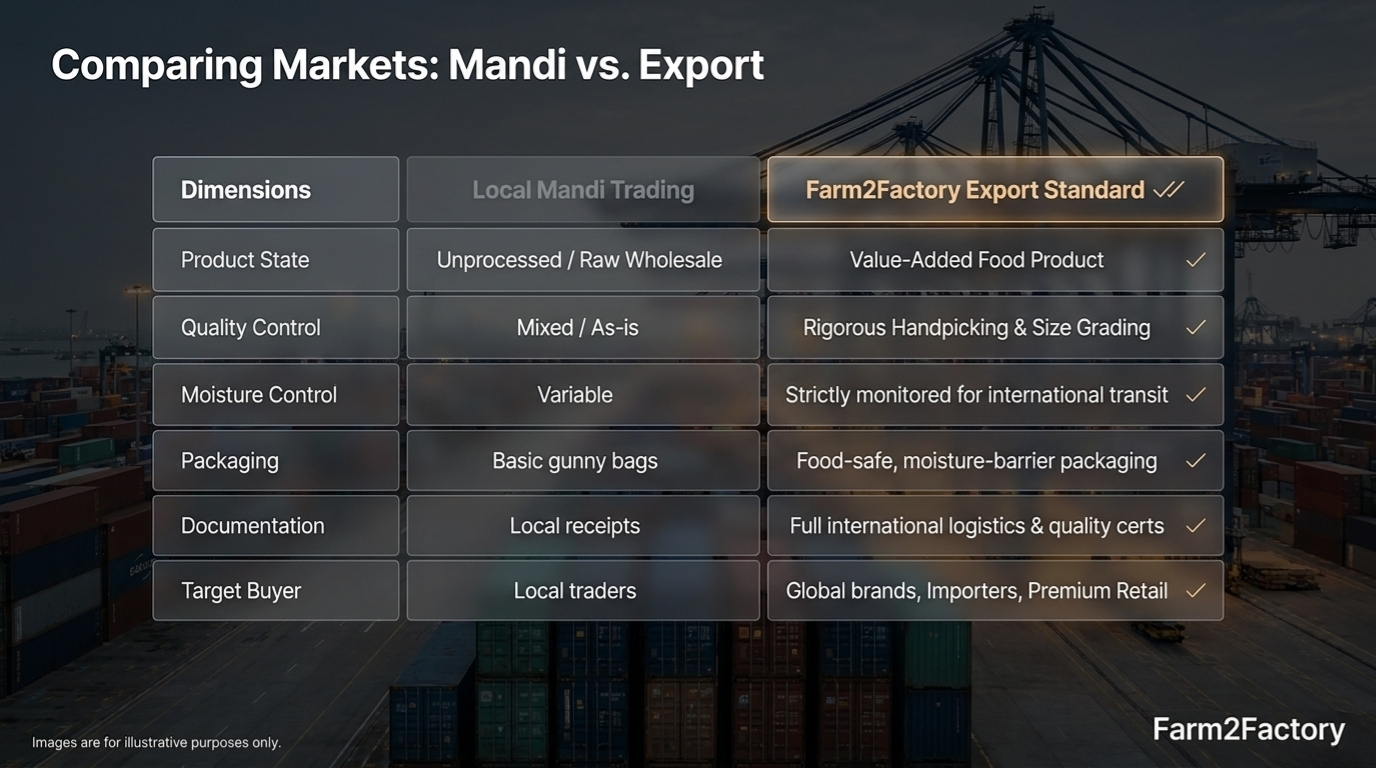
Why Export Prices Differ from Mandi Prices
Many first-time buyers compare export quotations with local mandi prices.
However, these are two different markets.
Local mandi prices generally refer to unprocessed or basic wholesale trading.
Export pricing includes several value-added processes, such as:
- Size grading
- Handpicking
- Quality inspection
- Moisture control
- Food-safe packaging
- Export documentation
- International quality standards
- Logistics preparation
Therefore, export-quality Makhana cannot be compared directly with daily mandi rates.
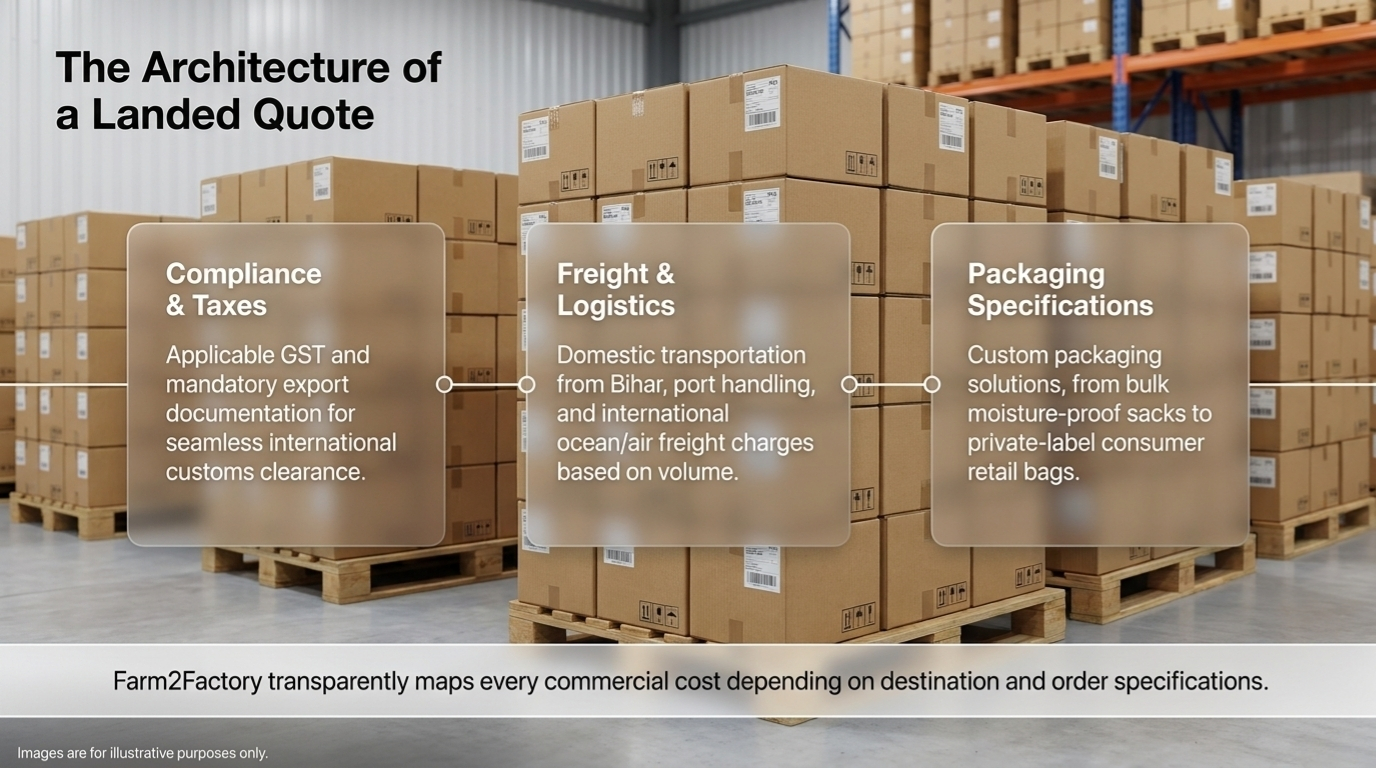
GST and Transportation
For commercial purchases, buyers should also consider additional costs such as:
- Applicable GST
- Freight charges
- Packaging
- Transportation
- Export documentation (for international shipments)
These costs vary depending on destination, shipment volume, and order specifications.
How Should Buyers Request a Price?
Instead of asking:
"What is today's Makhana rate?"
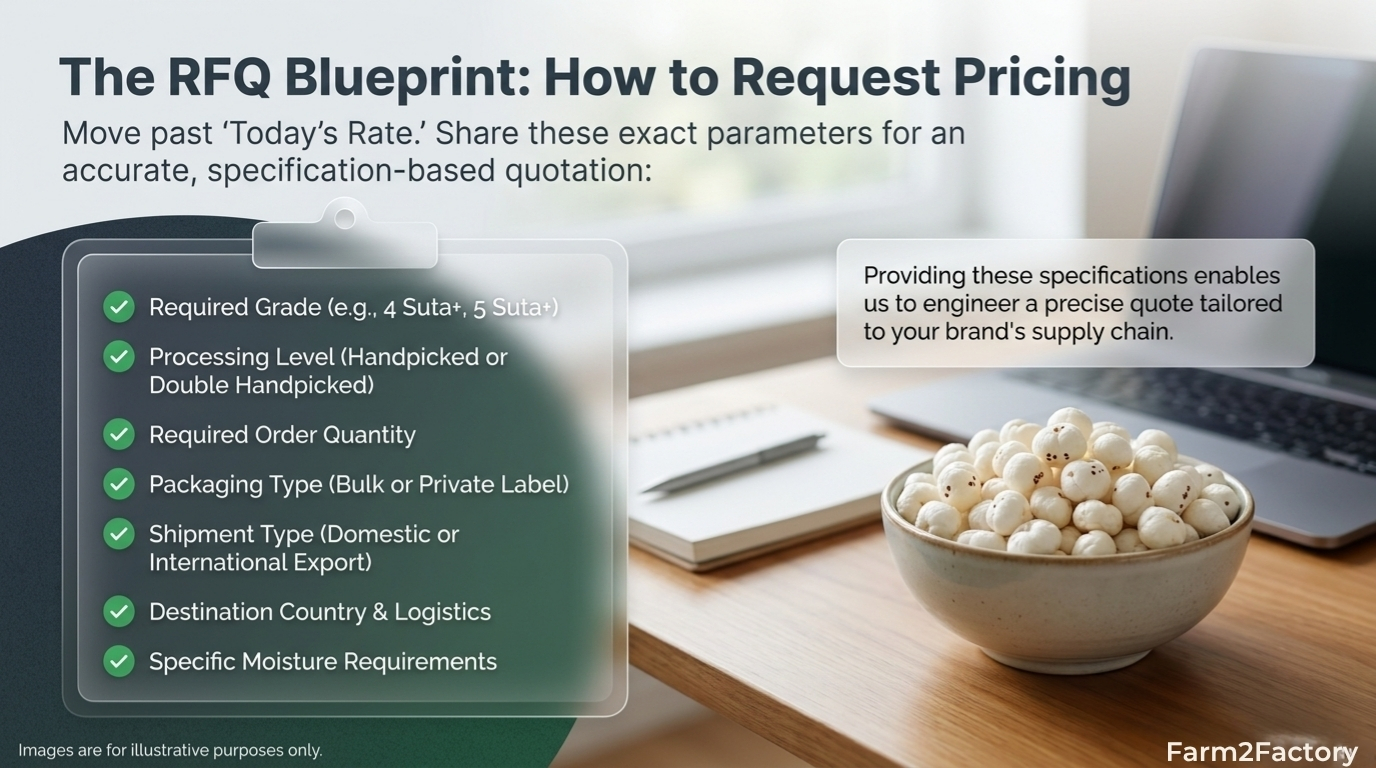
A better approach is to share your exact requirements, including:
- Required grade (4 Suta+, 5 Suta+, etc.)
- Handpicked or Double Handpicked
- Quantity required
- Packaging type
- Domestic or export shipment
- Destination country
- Moisture requirement
- Private label requirements (if applicable)
This enables suppliers to provide accurate quotations based on the exact product specifications.
Farm2Factory's Approach to Transparent Pricing
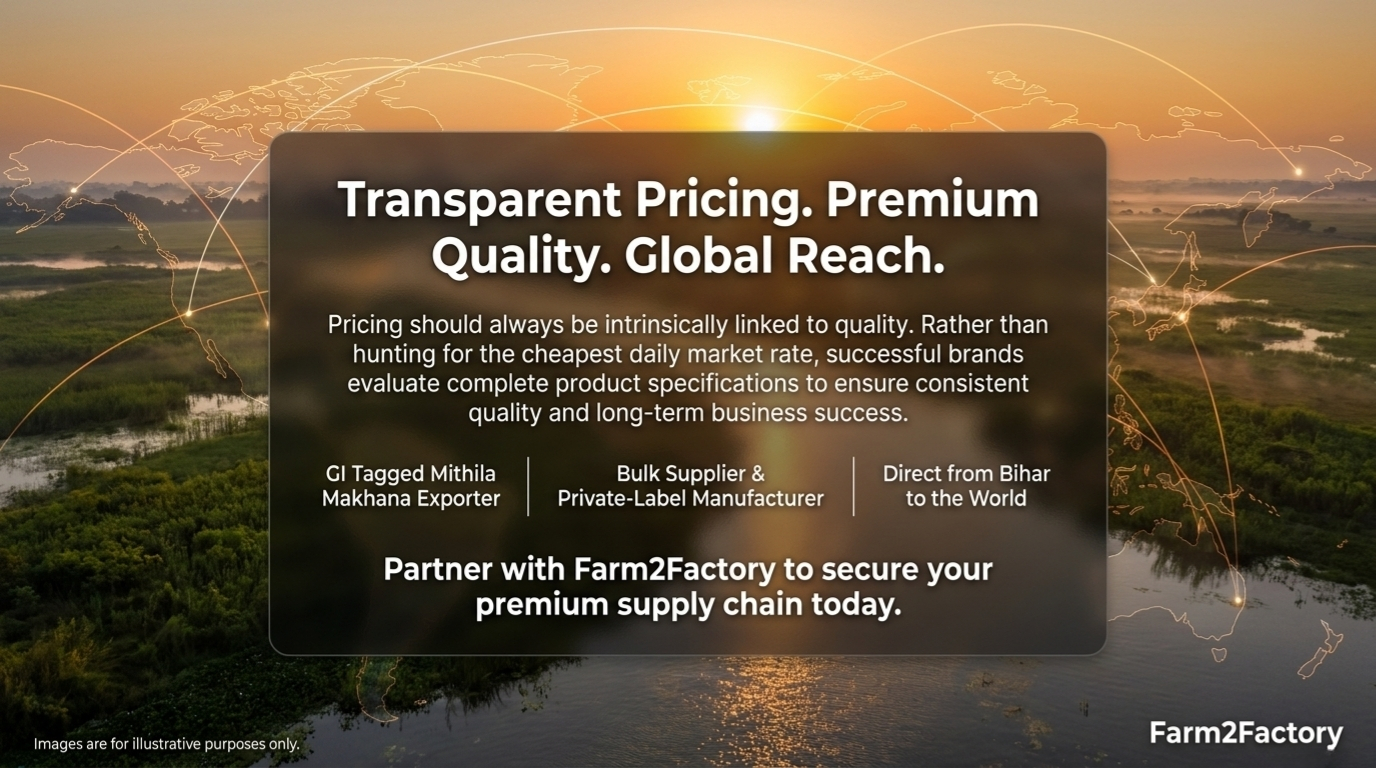
At Farm2Factory, we believe pricing should always be linked to quality.
As a trusted:
- Makhana Exporter India
- Fox Nuts Exporter
- Lotus Seeds Exporter
- Premium Makhana Exporter
- Bulk Makhana Supplier
- Wholesale Makhana Supplier
- Makhana International Supplier
- Healthy Snack Exporter from India
- GI Tagged Mithila Makhana Exporter
we provide specification-based quotations that ensure complete transparency for our customers.
Whether you require bulk raw Makhana, roasted Makhana, private-label products, or export-quality Fox Nuts, our team helps you select the right grade according to your business needs.
Conclusion
There is no single "fixed rate" for Makhana. Its price depends on several interconnected factors, including size, quality, grading, handpicking, seasonal availability, demand, and packaging.
Rather than focusing only on the daily market price, buyers should evaluate the complete product specification before making a purchasing decision. This approach ensures better value, consistent quality, and long-term business success.
If you are looking for a reliable Makhana Supplier India offering transparent pricing and premium-quality products, Farm2Factory is your trusted partner for bulk supply, private-label manufacturing, and global exports directly from Bihar.
Strategic Sourcing Advantage
Managing wholesale snack volume logistics requires complete pond-to-pack visibility. Farm2Factory bypasses traditional traders to deliver guaranteed purity, optimized container payloads, and reliable pricing.